The EEI check
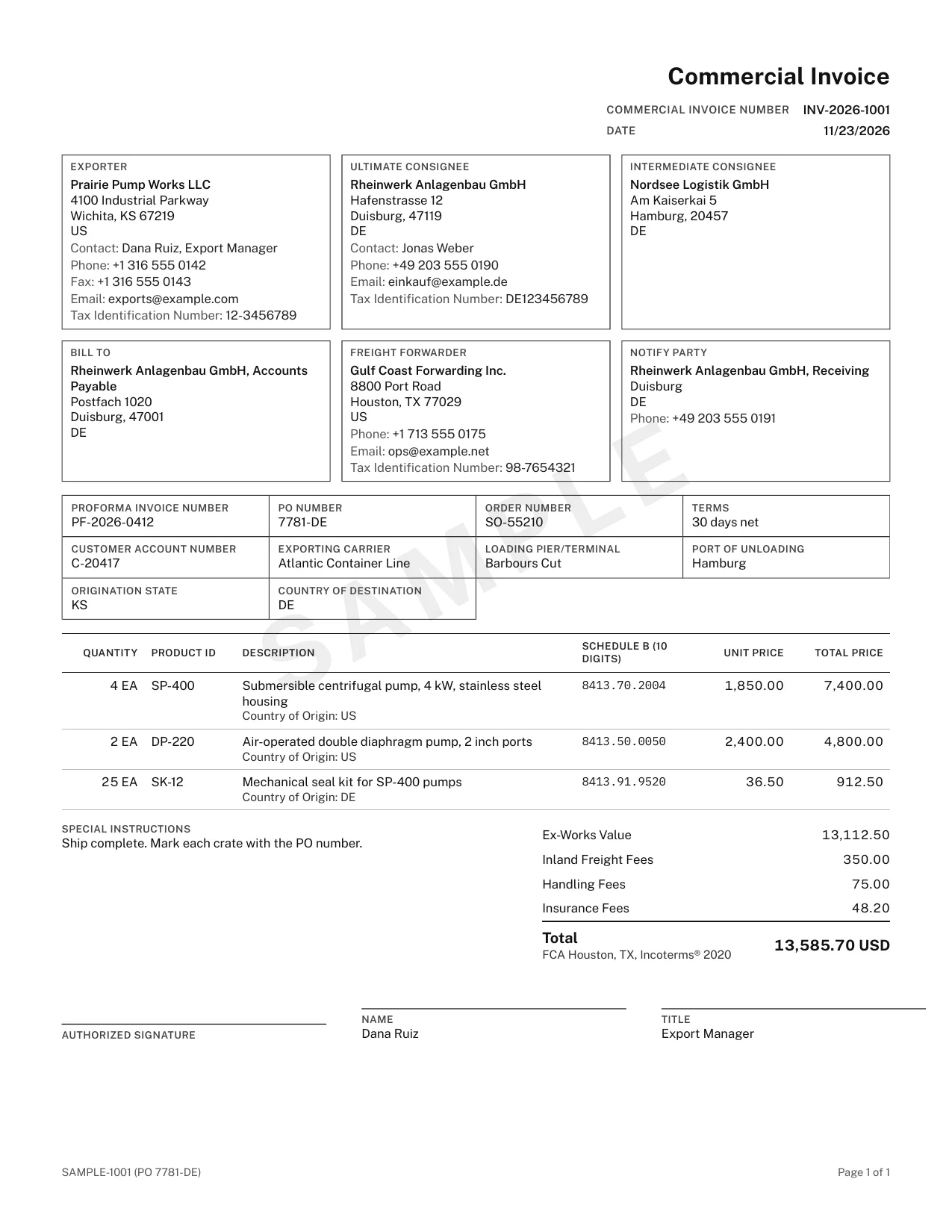
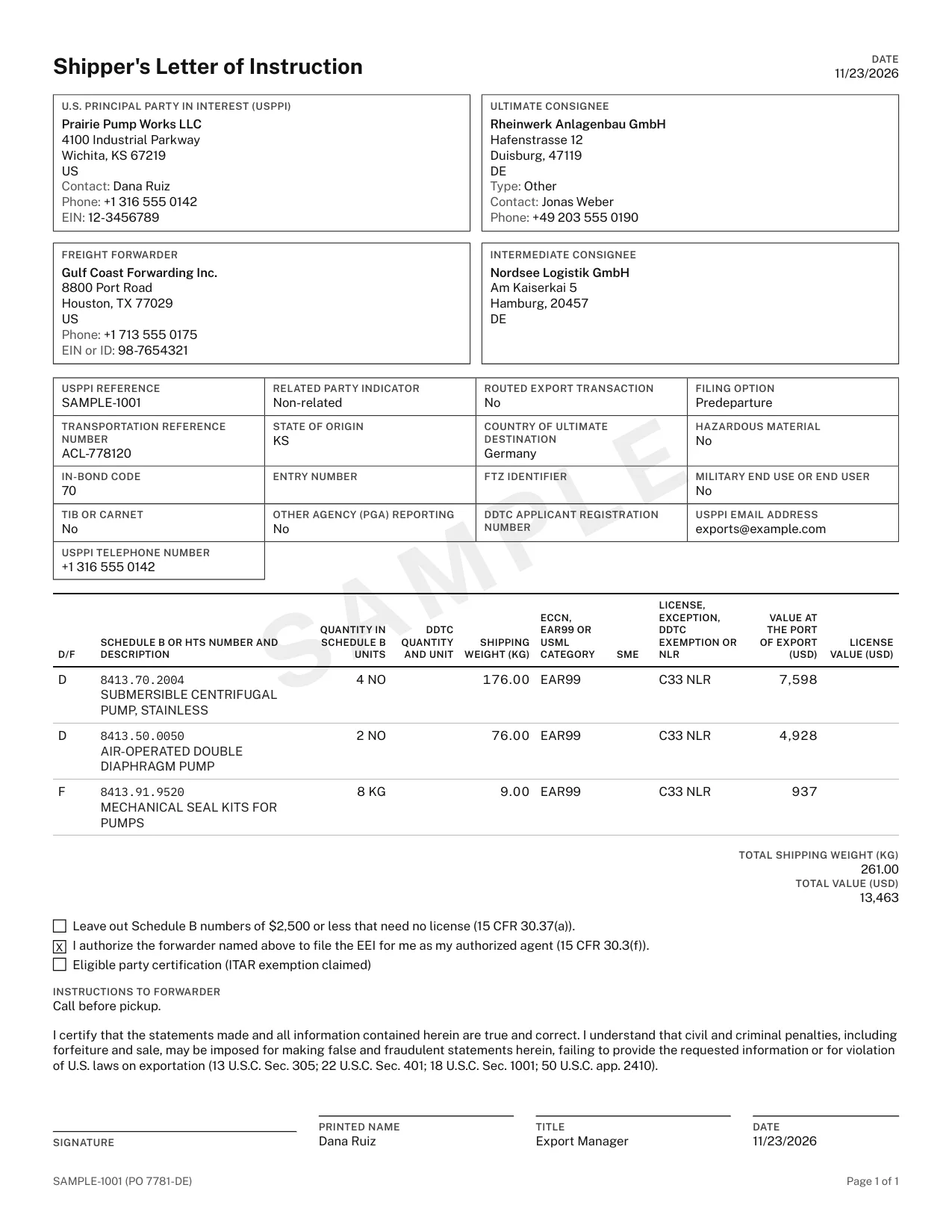
- 8413.70.2004 ($7,598.00), 8413.50.0050 ($4,928.00) are over $2,500 for one Schedule B number, so EEI must be filed. Only the numbers over $2,500, counting domestic and foreign goods separately, have to be reported. 15 CFR 30.37(a) (opens in a new tab)
Deadline by vessel
File the EEI and give the filing citation (ITN) to the carrier 24 hours before the cargo is loaded on the vessel at the US port. 15 CFR 30.4(b)(2)(i) (opens in a new tab)
What the EEI check found
-
Check The invoice also bills handling fees and insurance. Add to the line values the part incurred before the goods reach the exporting carrier at the port of export; loading at the port and charges beyond it stay out. Check with your forwarder which part that is.
-
Note Each line value at the port of export includes its share of the inland freight on the invoice, shared by line value.
Check before you file (5)
- Report the USPPI's own EIN, the one it uses for employee wages and withholdings. Another company's EIN is not allowed. 15 CFR 30.6(a)(1)(iii) (opens in a new tab)
- Report the quantity in the unit of quantity Schedule B sets for each code, as a whole number (net weight for weight units). Codes with no unit take "X". 15 CFR 30.6(a)(14) (opens in a new tab)
- The port of export is the seaport where the goods are loaded on the carrier leaving the United States. It must match the method of transportation. 15 CFR 30.6(a)(9) (opens in a new tab)
- The license code must match the export authority (license, license exception or NLR), and with a license the country of ultimate destination must be the one on the license (Germany here). 15 CFR 30.6(a)(23) (opens in a new tab)
- Report goods of foreign origin (made abroad and not substantially transformed in the United States) on a separate line from domestic goods, even under the same Schedule B number. 15 CFR 30.6(a)(11) (opens in a new tab)
In your account, the EEI is laid out in AESDirect's order for you to file from your own ACE account, where you stay the filer of record, and the ITN is kept on the shipment. Or your forwarder files it from the letter of instruction above (15 CFR 30.3).